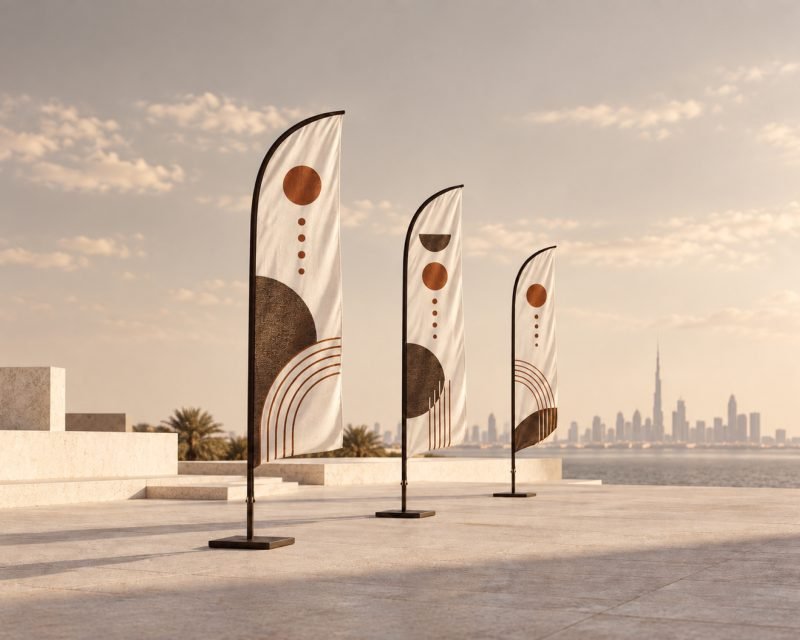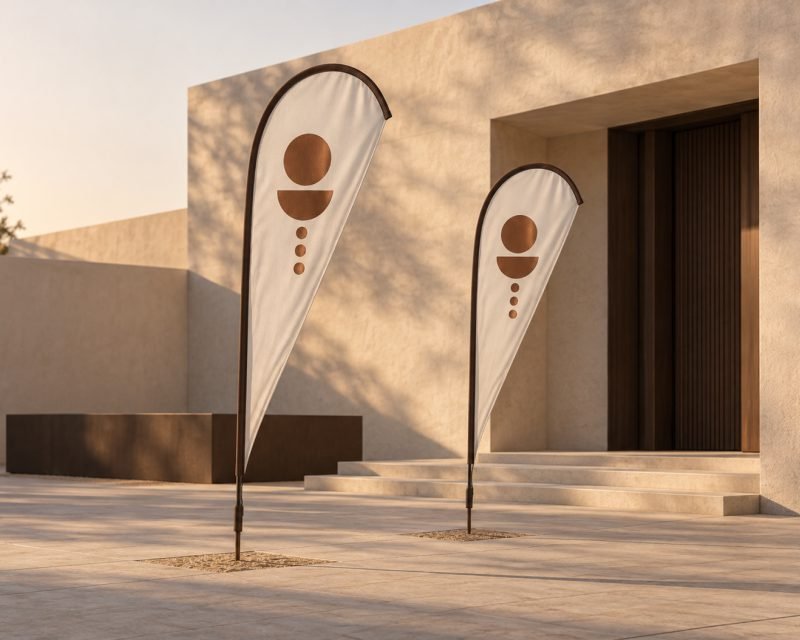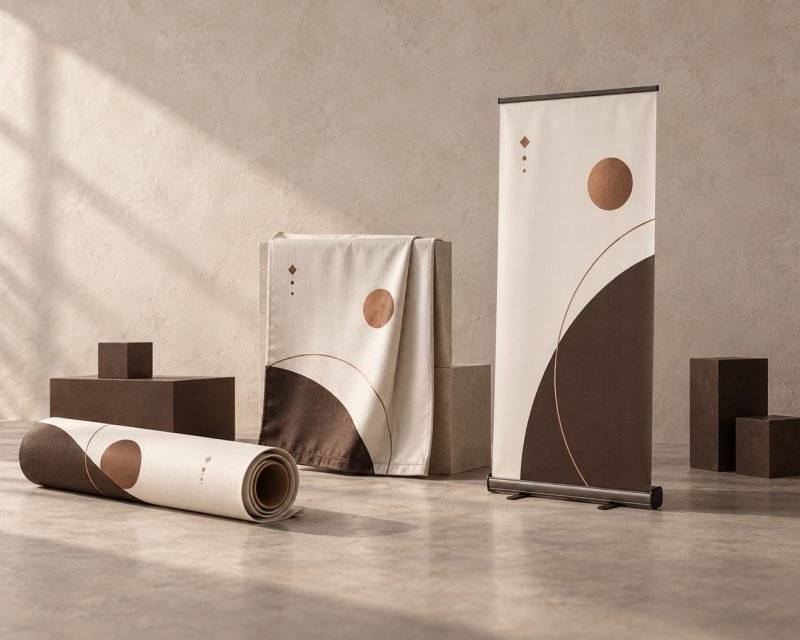
How a flag gets made.
- 01
Why the Ink Never Sits on Top
Flags are dye sublimated. The design prints onto transfer paper and is pressed into the fabric under heat, so the colour ends up inside the fibres. A flag printed with surface ink would crack along every fold within a month of flapping.
- 02
Both Sides Read at Once
Because the dye penetrates, the image shows through to the reverse at around eighty per cent strength, mirrored. For a logo that is usually fine. For text, we either accept the mirrored back or build the flag from two layers with a blockout between them.
- 03
Cutting Follows the Shape
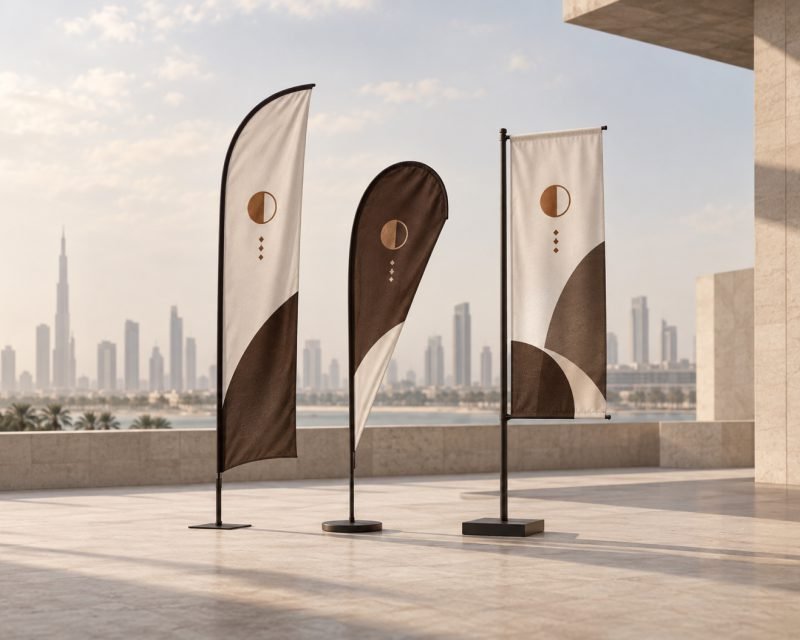
Rectangular, teardrop and blade shapes are cut after pressing. The curved shapes are cut against a template because a blade flag that is a few millimetres out will not sit properly in its pole sleeve.
- 04
Hems and Sleeves Are Sewn
Every edge is turned and stitched. The pole edge gets either a sewn sleeve or a row of toggles and clips depending on the hardware. Stitching here is doubled, because this seam takes all the load every time the wind pulls.
- 05
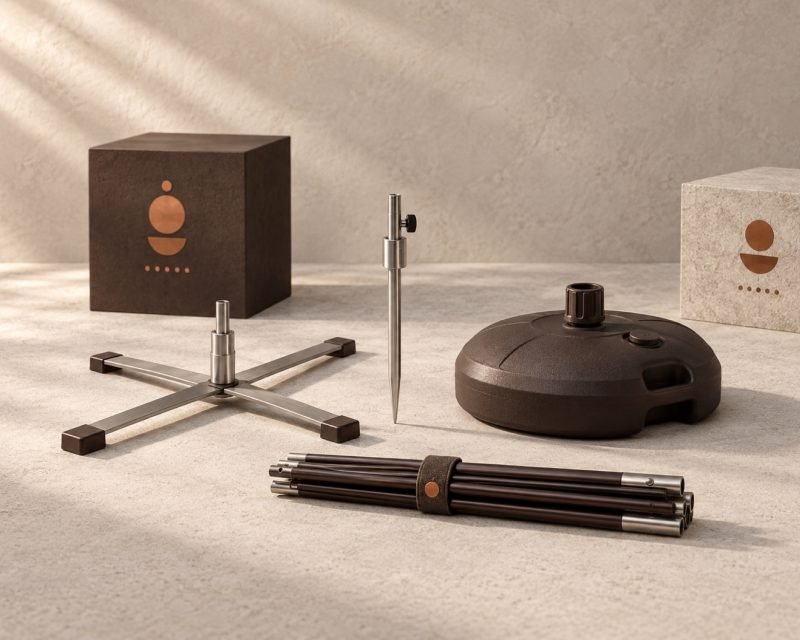
Packed With the Hardware
Flags ship folded with their poles and bases, and folding does no harm because the creases drop out within an hour of being flown.
A limit worth naming up front. Outdoors, in constant wind, a flag is a consumable. Ours last a season or more, but anyone promising you a flag that flies permanently without fraying at the fly edge is not being straight with you.
Choose from outdoor and event flags, indoor corporate flags, table flags, decorative flags and bases and hardware.