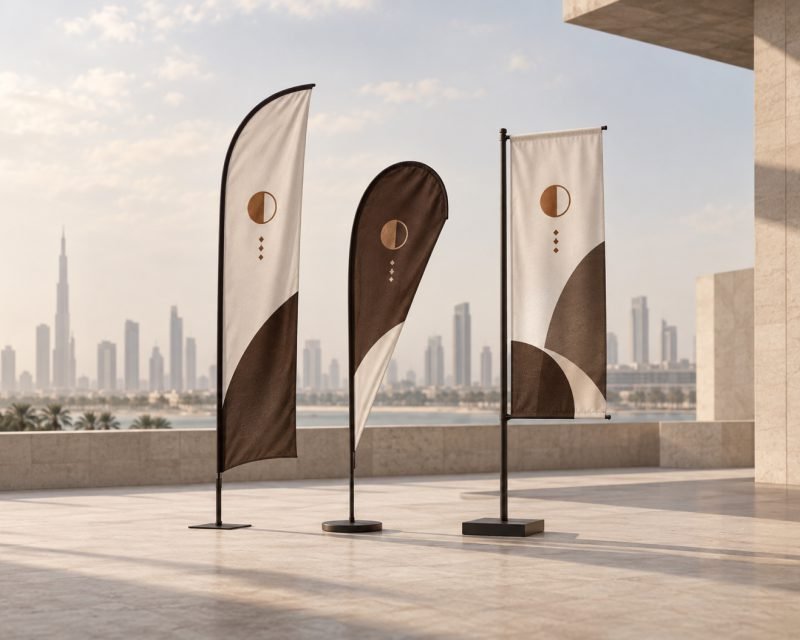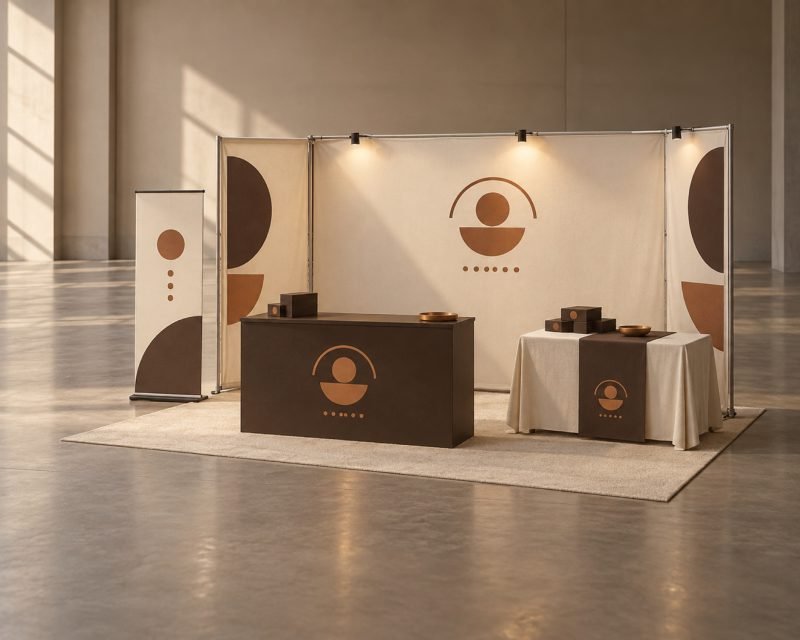
How a show week runs, from our side.
-
01
The Venue Sets the Rules First
Stand height, rigging, materials and build times are specified by the organiser. Those documents govern what can be made, so the brief starts with them and not with the design. Reading that pack first saves redrawing a stand that was never going to be approved.
-
02
Approvals Take Longer Than Production
Custom stands need drawings submitted and signed off before fabrication. The printing of the graphics is comparatively quick, and it is the paperwork around it that usually decides whether a stand is ready.
-
03
Graphics Are Printed to the Frame
Panels, fabric walls, counters and hanging banners are made to the structure's exact dimensions, which is why a late change to the stand plan is expensive in a way a late change to the artwork is not.
-
04
Everything Portable Gets Counted
Roll-ups, flags, badges, lanyards and giveaways are produced in parallel and packed by category. A box that arrives on site unlabelled costs an hour nobody has on build night, so every carton leaves here labelled by category and counted.
-
05
Build Up Is a Single Evening
Most stands go in during one overnight slot. Anything missing at that point stays missing for the show, which is the reason we deliver a stand complete and not in instalments.
-
06
Then It Comes Down Again
Reusable frames and cases go back to storage and the printed panels usually do not. Keeping the hardware and reprinting graphics is what makes the second show cheaper than the first, and a frame stored properly lasts several seasons.
Here is the uncomfortable timing. Exhibition season concentrates demand across the whole city into the same fortnight, and print and install capacity runs out before the venue does. A stand confirmed six weeks ahead is straightforward; one confirmed in the final week may not be deliverable.
See exhibition and event branding, backdrops and displays and flag printing.